
By: Rania Al-Dulaimi, dietetic student-volunteer University of Guelph, reviewed by Carlyne Remedios, Registered Dietitian and the JM Nutrition Team
Before we take a look at the answer to the question who should take a multivitamin a little background information is needed.
What Are Multivitamins?
Multivitamins are a combination of vitamins and minerals in different amounts. The formulation differs a lot, depending on which nutrients are available and in what amounts.
A multivitamin may include vitamins A, C, D, E, and K, multiple B vitamins, and minerals like iron, zinc, iodine and selenium, depending on the specific product.
Multivitamin/mineral (MVM) supplements can come in three types:
1. Broad-spectrum supplements which contain most vitamins and minerals that are not higher than the daily value, the recommended dietary allowance (RDA), or the appropriate amount of the nutrients
2. High-potency MVMs which have higher levels of certain vitamins and minerals than the daily value, RDA, and AI.
3. And specialized supplements which are made for specific groups or purposes (National Institutes of Health, 2024). MVMs are made to help support your diet by providing it with the nutrients that are missing, but are they really needed for everyone?
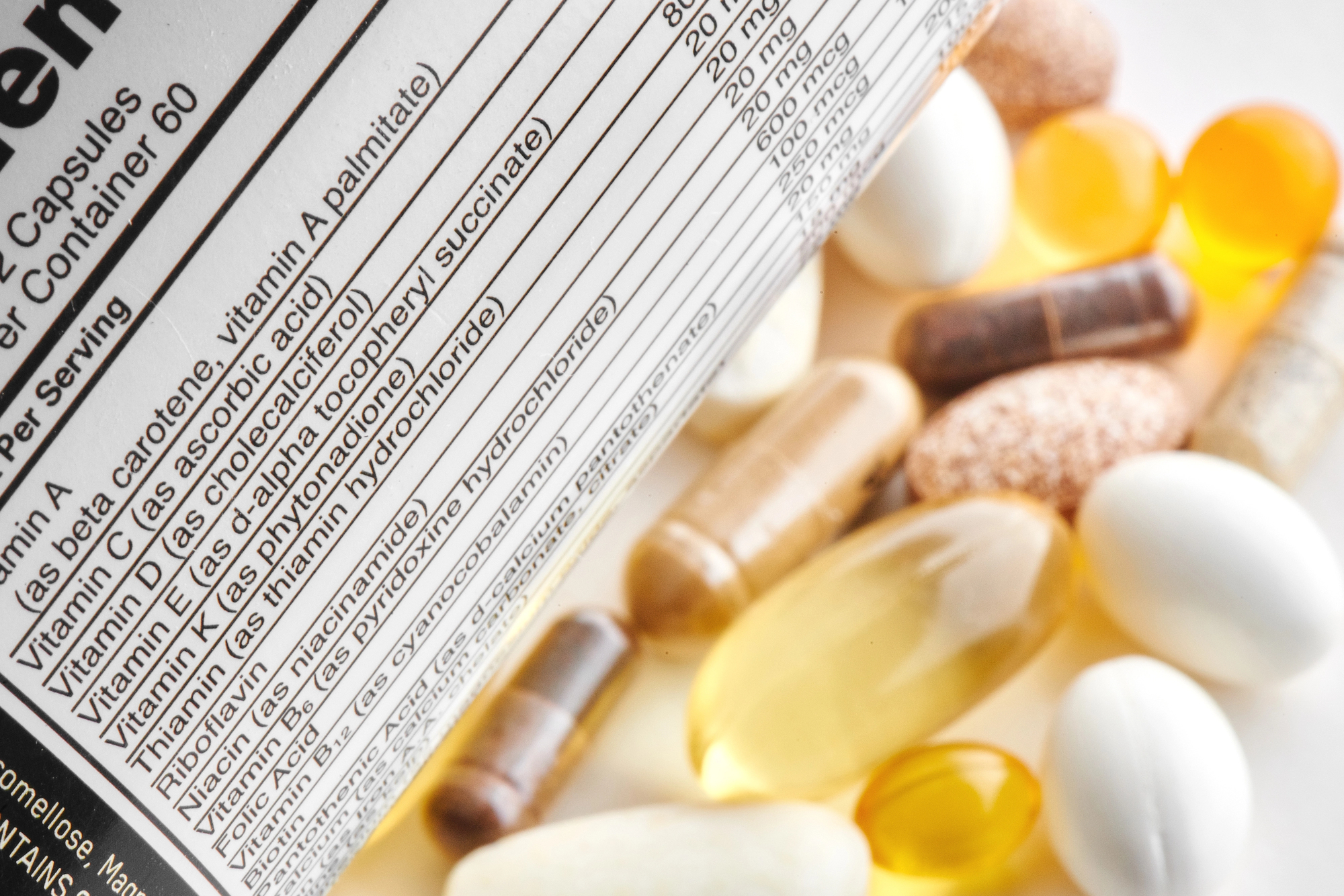
What’s actually inside a multivitamin?
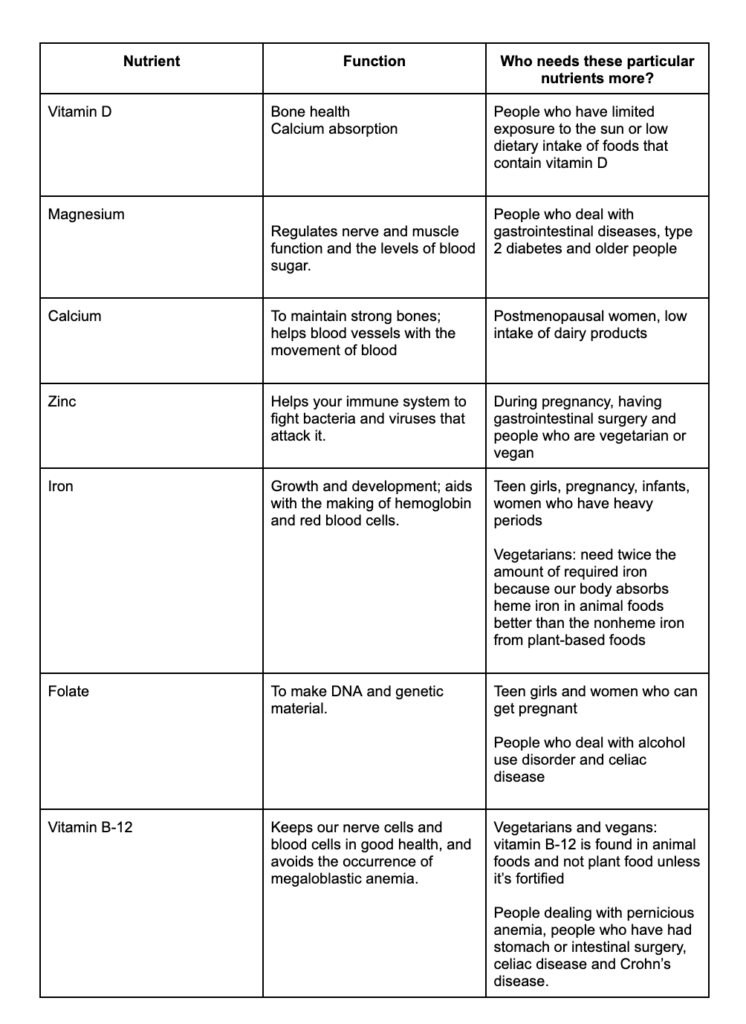
The content of multivitamin products varies among brands and products (National Institutes of Health, 2025). They often include a mix of vitamins and minerals, including vitamins D, calcium, magnesium, iron, zinc, folate and vitamin B12 (Cleveland Clinic, 2022).
Why are those vitamins important
(National Institutes of Health, 2023)
Multivitamins Explained: Benefits and Risks
Potential benefits of multivitamins
Multivitamins can fill gaps in the diet when someone isn’t getting enough vitamins and minerals.
They can be helpful for individuals with low nutrient intakes or high nutrient requirements, such as pregnant women.
Related: dietitian’s support for pregnancy
Multivitamin products, however, differ widely in the types and amounts of nutrients they contain, and the benefits of these products will vary depending on the nutrients they offer and the nutritional needs of an individual (National Institutes of Health, 2024).
Risks of miltivitamins
When used as directed, multivitamins are generally safe to consume.
However, certain nutrients may still cause a problem when combined with other supplements or fortified foods, especially if intake of an individual nutrient is taken to a higher level, particularly if a Tolerable Upper Intake Level (UL) is exceeded.
It is important to take into account total intake from food and supplements and not exceed the UL for those nutrients.
In addition, some vitamins and minerals may also interact with drugs or illnesses.
For example, vitamin K can interact with warfarin, a blood thinner, and iron can affect the absorption or effectiveness of some medications (National Institutes of Health, 2026).
Using beta-carotene by tobacco smokers or people exposed to asbestos at work is an important harmful effect that raises the risk of lung cancer.
High doses of vitamin supplements can have a number of known side effects, such as a decrease in bone mineral density with moderate doses of vitamin A and hepatotoxicity or teratogenicity with high doses of vitamin A.
High doses of Vitamin D can also have harmful effects, including an increased risk of kidney stones and hypercalcemia.
Additionally, other supplements may cause potential harm at high doses and should be considered carefully ( U.S. Preventive Services, 2022).
Multivitamins with high levels of vitamin A or beta-carotene are not recommended for people who smoke or used to smoke. Studies have shown that people who smoke and have high dosages of vitamin A and beta-carotene per day have a high risk of lung cancer. Multivitamins usually have lower doses, but make sure to read the labels to be safe (NIH, 2022).
Who may benefit from a multivitamin?
1. Individuals with a diagnosed nutrient deficiency (National Institutes of Health, 2017)
2. Individuals who have had surgery on the GI tract (National Institutes of Health, 2024)
3. Individuals who have a condition that interferes with nutrient absorption, such as IBD (NIDDK, 2019).
4. Vegans or vegetarians who require a reliable source for nutrients, such as B12 (National Institutes of Health, 2025).
5. Pregnant people or those who are planning pregnancy (Government of Canada, 2026)
6. Some older people who rely on food as their source of intake (National Institutes of Health, 2025).
Pregnant women at risk of malnutrition who take a multivitamin have a reduced risk of having a premature baby or a baby that is low in weight, but multivitamins may not affect pregnant women who already take sufficient amounts of all nutrients ( NIH, 2025).
Related: Nutrition Tips for Pregnancy
Should you take a multivitamin every day?
For most healthy adults, a mixed, balanced diet can provide many essential nutrients each day, so a multivitamin isn’t necessarily required.
However, some people may benefit from additional sources of specific nutrients when they cannot meet their nutritional needs through food only, such as during certain life stages, with restrictive diets, or when medical conditions affect nutrient absorption (National Institutes of Health, 2026).
What to look for when choosing a multivitamin?
It’s important to check for independent quality verification, when choosing a multivitamin.
For example, USP verification is used to verify that a product contains the ingredients and amounts as specified on the label, contains no unacceptable amounts of certain contaminants and is of specified quality. The USP Verified Mark does not imply any health benefit or effectiveness (USP, 2026).
If you are considering a multivitamin, you should consider a formula that includes a variety of vitamins and minerals at levels recommended for you.
Formulation may vary according to age, sex and life stage.
For instance, multivitamins made for older adults typically contain less iron, more calcium, vitamin D, and vitamin B12 than those made for younger adults.
Prenatal supplements do not typically contain vitamin A as retinol, and most kids’ multivitamins contain the age-appropriate levels of nutrients.
When selecting a multivitamin, consider its appropriate age, life stage and nutritional needs, rather than its nutrient percent content (National Institutes of Health, 2024).
Gummy vitamins
Gummy multivitamins are not necessarily better than traditional tablets.
When choosing a multivitamin, it is important to consider the nutrients and amounts that the product provides.
Gummy multivitamins may be a suitable option for people who have difficulty taking traditional tablets (Cleveland Clinic, 2021).
What’s more, some gummies contain added sugar to improve their taste, so it is useful to check the label for the amount of added sugar (Cleveland Clinic, 2021).
Gummies may also contain a different range or amounts of vitamins and minerals than traditional tablets, and some contain little or no iron (National Institutes of Health, 2025).
Finally, check the serving size to determine how many gummies provide the listed amounts of nutrients (National Institutes of Health, 2026).
Do men and women need different multivitamins?
Not necessarily.
Some multivitamin products may be targeted to specific age groups, life stages, and genders, due to differing nutrient needs.
Remember, though, don’t just look at the fact that it’s marketed for women or men, but at the nutrients contained in the product and how they fit your nutritional requirements (National Institutes of Health, 2026).
When during the day is it best to take your multivitamin?
There’s no one right time to take a multivitamin, since multivitamin/mineral supplements have varying amounts and combinations of nutrients (National Institutes of Health, 2025).
However, there are some things to consider as to when to take it.
For example, some medicines, like levothyroxine, are affected by the timing, as minerals like calcium and iron can affect how well the medicine is absorbed (National Institutes of Health, 2024).
It may also be beneficial to take a multivitamin with meals for individuals who have gastrointestinal side effects when taking the supplement with multivitamin/mineral supplements.
If you don’t like taking your multivitamin at a certain time of day, you can change the timing within the directions of the product.
It is important for most people to take the supplement regularly, as directed by the product’s instructions (MedlinePlus, 2026).
The Multivitamin Myth: What the Research Says
Multivitamins are not a quick and easy way to improve health.
At this time, there is no evidence that multivitamin supplements help to prevent premature death, cancer, or heart or blood vessel disease in healthy adults who don’t have known nutrient deficiencies or nutrient needs (U.S. Preventive Services Task Force, 2022).
A multivitamin/mineral supplement cannot replace a healthy diet as it cannot provide the same vitamins, minerals, dietary fibre, and other nutrients found in a wide range of foods (National Institutes of Health, 2025).
The following are aspects of a healthy lifestyle that can help lower the risk of having chronic diseases: Eating healthy, being physically active and avoiding tobacco use (CDC, 2025).
Conclusion
In the end, not all people need a multivitamin.
The most common approach for healthy adults is to obtain most of their nutrition from a diverse, nutrient-rich diet.
That said, however, a multivitamin might be helpful if a person can’t get enough of a certain nutrient from their diet or needs more of it.
This can be due to pregnancy, diet, elderly age, or some medical conditions that impact absorption of nutrients or interfere with their ingestion (National Institutes of Health, 2026).
The purpose is to determine individual nutritional requirements and supplement as necessary. Therefore, a multivitamin should be used to supplement a good, healthy diet (National Institutes of Health, 2025).
Should you feel you require personalized nutritional sessions surrounding supplementation or a related health matter, book a free consultation or contact us for an appointment. As always if you have comments or questions, we encourage you to let us know.
References
National Institutes of Health. (2024, July 17). Office of Dietary Supplements – Multivitamin/mineral Supplements. Nih.Gov. https://ods.od.nih.gov/factsheets/MVMS-HealthProfessional/.
Clinic, C. (2022, August 30). Do Multivitamins Work? Who Should and Shouldn’t Take Them. Cleveland Clinic. https://health.clevelandclinic.org/multivitamins-are-they-worth-it?utm.
Office of Dietary Supplements – Multivitamin/mineral Supplements. (2025). Nih.Gov. https://ods.od.nih.gov/factsheets/MVMS-HealthProfessional/?utm.
National Institutes of Health. (2023, December 15). Office of Dietary Supplements – Vitamin B12. NIH.Gov. https://ods.od.nih.gov/factsheets/VitaminB12-Consumer/.
National Institutes of Health. (2024, July 17). Office of Dietary Supplements – Multivitamin/mineral Supplements. Nih.Gov. https://ods.od.nih.gov/factsheets/MVMS-HealthProfessional/.
National Institutes of Health. (2024, July 17). Office of Dietary Supplements – Multivitamin/mineral Supplements. Nih.Gov. https://ods.od.nih.gov/factsheets/MVMS-HealthProfessional/.
Vitamin, Mineral, and Multivitamin Supplementation to Prevent Cardiovascular Disease and Cancer: Preventive Medication. (2022, June 21). Uspreventiveservicestaskforce.Org; US Preventive Services Taskforce.https://www.uspreventiveservicestaskforce.org/uspstf/index.php/recommendation/vitamin-supplementation-to-prevent-cvd-and-cancer-preventive-medication.
National Institutes of Health. (2017). Office of Dietary Supplements – Multivitamin/mineral Supplements. Nih.Gov. https://ods.od.nih.gov/factsheets/MVMS-Consumer/.
NIH. (2022). Multivitamins-do you need one? And which one should you choose? https://ods.od.nih.gov/pubs/Scoop%20Winter%202022.pdf.
National Institutes of Health. (2024). Office of Dietary Supplements – Vitamin B12. Nih.Gov; National Institutes of Health. https://ods.od.nih.gov/factsheets/VitaminB12-HealthProfessional/.
NIDDK. (2019). Crohn’s disease. National Institute of Diabetes and Digestive and Kidney Diseases. https://www.niddk.nih.gov/health-information/digestive-diseases/crohns-disease.
National Institutes of Health ( 2025). Office of Dietary Supplements – Vitamin B12. https://ods.od.nih.gov/factsheets/VitaminB12-HealthProfessional/.
Government of Canada, H. (2026). Applying Canada’s Dietary Guidelines: Nutrition considerations during pregnancy and to support breastfeeding – Canada.ca. Canada.Ca. https://www.canada.ca/en/health-canada/services/food-guide/explore/dietary-guidelines/applying/advice-nutrition-different-life-stages/considerations-pregnancy-support-breastfeeding.html.
NIH. (2025). Office of Dietary Supplements – Multivitamin/mineral Supplements. Nih.Gov. https://ods.od.nih.gov/factsheets/MVMS-Consumer/?utm_medium=email&utm_source=govdelivery.
Dietary Supplement Manufacturing – USP Verified Mark | USP. Www.Usp.Org. Accesssed September 29, 2026, from https://www.usp.org/verification-services/verified-mark.
Clinic, C. (2021). Do gummy vitamins work as well as traditional vitamins? Cleveland Clinic. https://health.clevelandclinic.org/do-gummy-vitamins-work-as-well-as-traditional-vitamins.
National Institutes of Health ( 2026). U.S. Department of Health and Human Services, dsld.od.nih.gov/label/273554.
National Institutes of Health. (2024, October 9). Iron: Fact Sheet for Health Professionals. National Institutes of Health. https://ods.od.nih.gov/factsheets/Iron-HealthProfessional/.
MedlinePlus (2026), Multivitamin: MedlinePlus Drug Information. https://medlineplus.gov/druginfo/meds/a626028.html.
National Institutes of Health. (2024). Calcium. National Institutes of Health Office of Dietary Supplements. https://ods.od.nih.gov/factsheets/Calcium-HealthProfessional/.
CDC. (2025). Preventing Chronic Diseases: What You Can Do Now. Chronic Disease. https://www.cdc.gov/chronic-disease/prevention/index.html?utm.
Other Popular Posts:
Protein: Is It Worth the Hype?
Supplements: What They Can Do, What They Cannot Do
About Author:
Carlyne Remedios is a registered dietitian who provides support for weight loss, various digestive health concerns, chronic disease and more. Carlyne is registered with the College of Dietitians of Ontario.
Our nutrition blog was been named one of the Top 100 Nutrition Blogs, Websites and Newsletters to Follow in 2026 and one of the Top Canadian Nutrition Blogs by Feedspot. So don’t miss out and subscribe below to both the newsletter that includes latest blog posts.
JM Nutrition is a nutritional counselling service by registered dietitians and nutritionists in Canada.